


Prototyping a Short-Form Text App for Television
2024


timeline
9 weeks

skills
Prototyping
10-foot UI
team
Sonya Surapaneni (designer)
Hong Yu Wong (designer)

tools
Figma
ProtoPie
HeyGen AI
ElevenLabs
overview
An unconventional project
Through the Silicon Valley School of Design (SVSD), a 6-month program led by a Google designer, my partner and I took on the brief: Can short-form text apps work on a TV screen?
We chose text apps because news breaks there first

Why? Posting text is immediate and takes far less prep than making a video.
Post immediately
Text can go out the moment news happens, without waiting to film or edit.
Skip the video prep
There’s no filming, editing, or extra production before an update goes out.
We led with prototyping since no precedent existed for text apps on TV
We drew inspiration from apps like TikTok and Snapchat, which began as prototypes, proof that sometimes the only way to believe an idea is to see it in action.
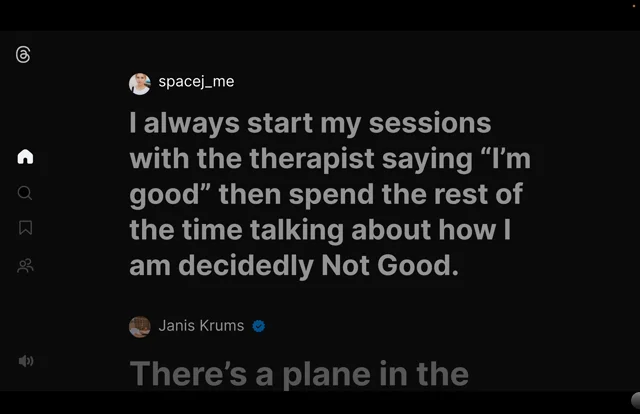
Note: This is not a product recommendation
We are not suggesting that this is an urgent thing for Threads to build; we are acting as an exploratory team. However, if we can validate this exploration, it can have broader implications for other short-form text apps.
strategy
We began by studying 10-foot UI design and popular TV application principles

Here are three key ways TV design differs from mobile:
Clear selection states
Focus has to stay obvious so a remote can move around.
Low information density
Screens stay simpler when viewed from farther away.
Higher color contrast
Text and controls need to stay readable from the couch.
With the big screen came big challenges
From our initial research and testing, we narrowed in on key differences between mobile and TV:

version 1
Literally translating the app onto TV for a passive consumption viewing experience
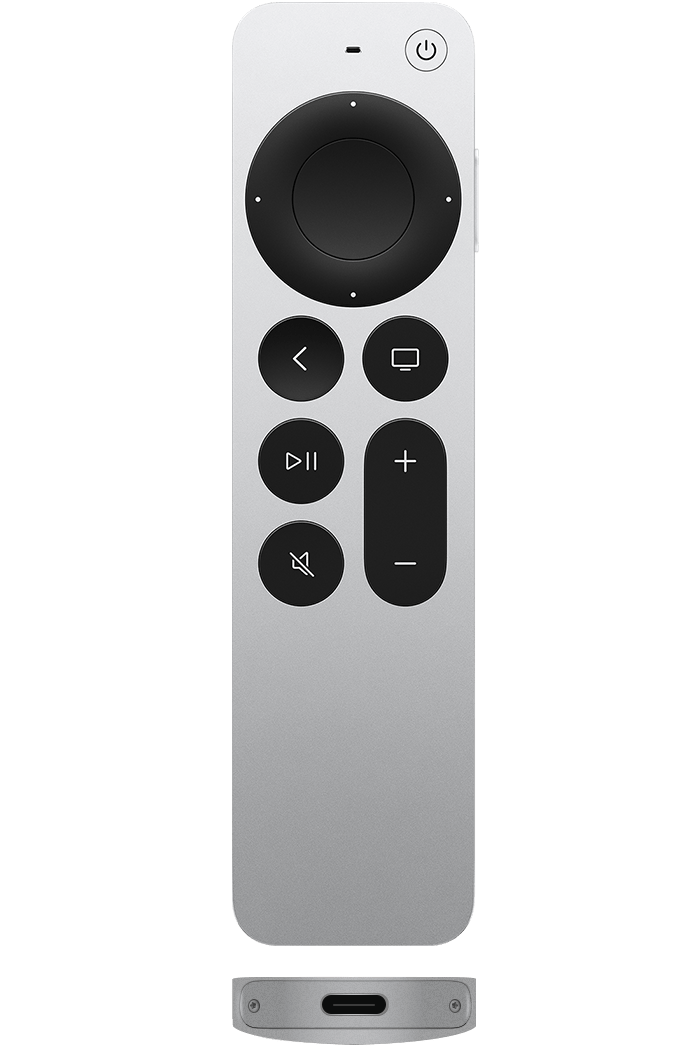
01 An auto-scrolling feed with audio and word by word highlight
02 A lightweight interaction model that allows for lightweight engagement
a key insight
We presented our solution to 20 designers who understood the standards for media experiences

Our reviewers pushed us to ask: were we looking at TV through the right lens?
We began questioning whether TV only serves as entertainment or if it plays a deeper, more ambient role in the home. We identified three levels of engagement of how people watch TV:
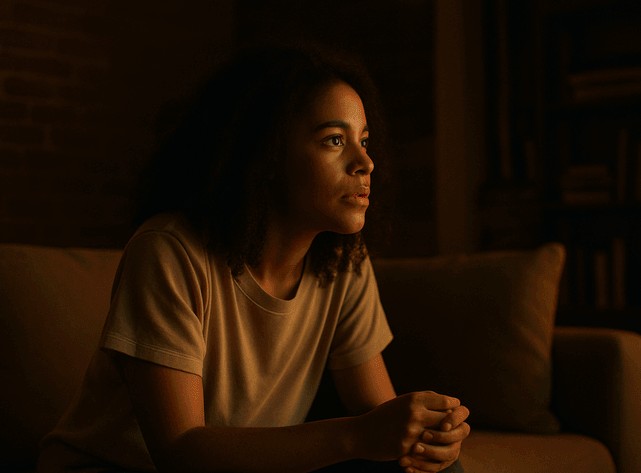
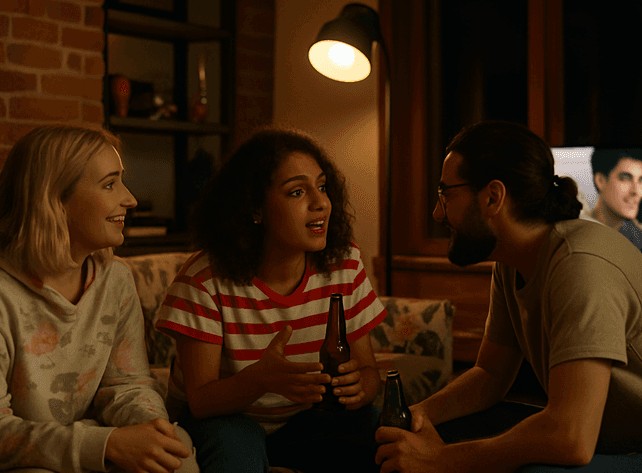
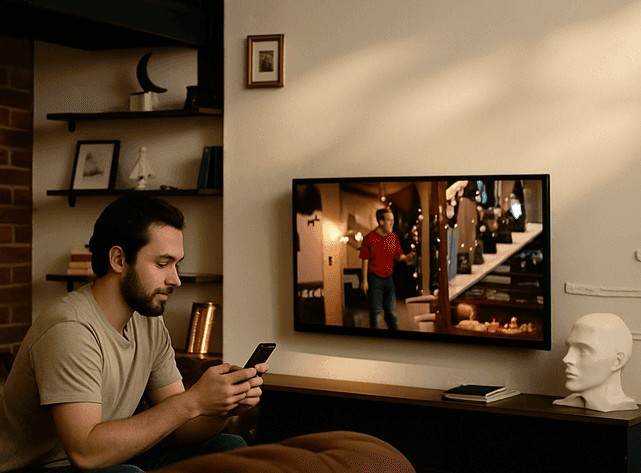
 A key insight: TV is as a third voice in the home
We often leave the TV on in the background. Even when we’re only minimally engaged, it creates a sense of presence, almost like a companion. This shifted our thinking: instead of designing only for focused attention, we began considering how content could live ambiently in the home.
version 2
An even more passive experience: screensaver mode for those who barely look up
User testing worked—until we found a popular format: Reddit stories over gameplay.
Why is this format so popular?
A compelling narrator
A voice creates presence even when people aren’t looking at the screen at all.
A curated stream
Constant scrolling is tiring, but a well-curated feed feels easy and effortless.
version 3 (final solution)
A personalized TV channel generated by your Threads algorithm
reflection
The feedback showed that the talk show format was compelling for all levels of engagement
Multiple rounds of user testing and several high-stakes presentations to media designers later, we realized our final version hit the mark: compelling and passive, but entertaining. We found a medium to make short-form text on TV possible.

Takeaways from an unconventional project
This project was full of ups and downs; we experimented with new AI platforms, sat through some brutal feedback, and dealt with prototypes crashing an hour before presentations. But in the end, it was all worth it because I genuinely learned so much. Here are the three biggest lessons I'll carry forward with me:
Design for viewing habits
TV often stays on in the background, not in hand.
Learn from media that works
Formats people already love can hold attention on TV.
Prototype to validate
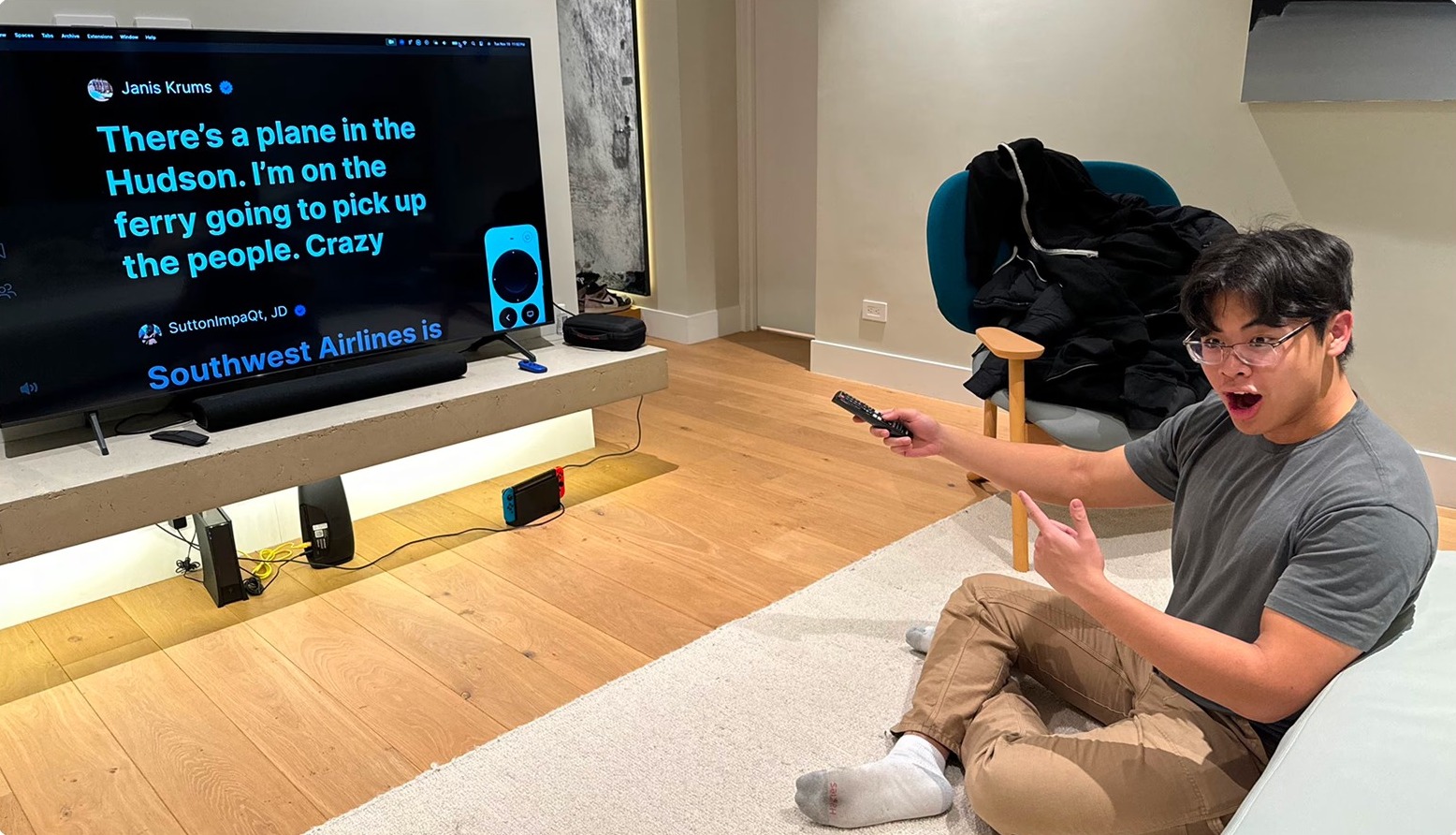
Seeing the idea on a real TV made it feel believable.